
Not One Fixture Down: How Cape Canaveral Made Solar Lighting the Coastal Standard
100+ FLT Solar Fixtures, Zero Lost Across Six Hurricane Seasons
FLT installations
for maintenance
Overview


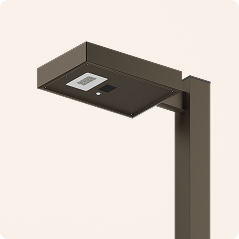
SCL2 Solar Streetlight
High-output SCL2 solar streetlight delivering 3,680 lumens of full night illumination across parking lots, streets and open areas, with no trenching or grid connection required.

"When your in a coastal environment, you think differently about durability, replacement and what happens when weather puts pressure on the system."
A Coastal Infrastructure Problem
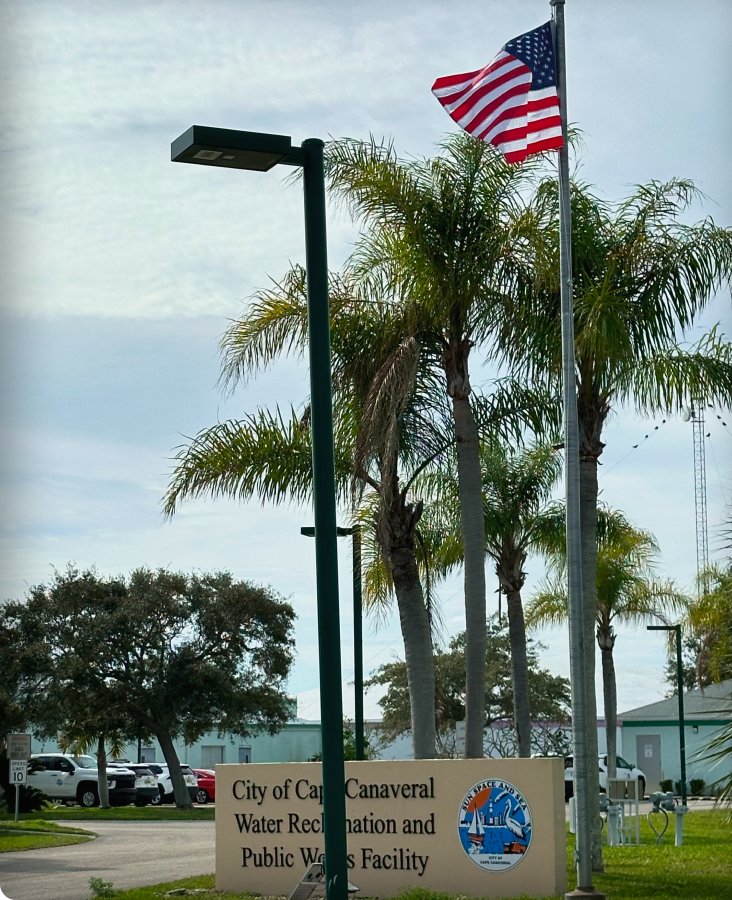
Cape Canaveral sits on a barrier island on Florida’s Space Coast, where hurricanes and tropical storms are a regular part of life. When Zach Eichholz, Chief Resilience Manager & Emergency Operations Coordinator, and his team evaluated their lighting situation in 2019, the existing fixtures were making an already challenging environment harder to manage.
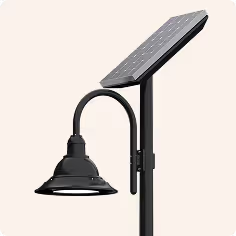
The city’s older solar lights, sourced from a different vendor, had two large solar panels mounted at the top of tall masts, roughly 20 feet in the air. In high winds, they acted like sails and were prone to toppling during hurricanes. Some lights didn’t even make it through a strong thunderstorm.
Meanwhile, critical city infrastructure – including the water reclamation facility serving all 10,000 residents – relied on grid-tied lighting that blacked out during every storm. For a facility operating 24 hours a day to keep the city’s wastewater systems running, that was a real problem.
"We get lots of hurricanes and our previous solar lighting provider just couldn't match the performance, durability or ease of replacement that FLT could do."
Why FLT: Resilience, Efficiency and Community Fit
The switch to FLT started at the water reclamation facility in 2019 and quickly became the blueprint for the rest of the cities’ outdoor lights. The FLT solar fixtures were a clear leap forward: self-contained, lower profile, easier to install and built to run all night without the grid.
The design difference was immediately obvious. The low-profile form was aerodynamic and provided little for wind to grab onto – a critical distinction on a barrier island that sees multiple storms every year. Six hurricane seasons later and the fixtures are standing strong.
"FLT's performance, light output, durability, ease of replacement and interchangeability were the clear deciding factors over our previous provider."
Cape Canaveral also worked with FLT on a custom forest green powder coat so that the fixtures match the city’s existing poles and blends into the tree canopy. The lights are unobtrusive enough that the city hangs community banners from them. As Eichholz puts it, the goal was for them to disappear into the environment rather than announce themselves.
On Ridgewood Avenue, within a few hundred feet of the beach, the city installed amber LEDs to protect sea turtle nesting. Brevard County is one of the most densely concentrated sea turtle nesting areas in the world, and standard white lights pull turtles off course, towards the road and away from the water. Amber is much harder for them to detect, so the street stays lit and the turtles stay in the environment they’re intended to be in.
Results: A City-Wide Commitment to Solar Light Resilience
What started as a single facility upgrade in 2019 has today become a city-wide commitment. Cape Canaveral has now nearly finished replacing every older solar fixture with FLT lighting, over 100 fixtures across its streets, paths and facilities, and the results have held up through every storm season since.
The water reclamation facility has stayed lit through every grid outage. Community feedback has been positive, and FLT’s solar lighting has become the standard for how Cape Canaveral builds.
"The lights keep shining during grid outages, I've got all good things to say and we're thinking solar lighting for all of our new projects now."
across the city
Protecting More Than Streets
For Cape Canaveral, the sustainability case for solar lighting isn’t abstract. The city sits on a barrier island bordered by the Indian River Lagoon, a waterway with a total economic value of $28.3 billion and one of Florida’s most ecologically significant ecosystems.
Roughly 16% of excess nitrogen entering the lagoon comes from atmospheric deposition, pollutants that settle into the water from the air. Reducing the city’s grid electricity consumption through solar lighting lowers the emissions that contribute to that deposition. Protecting the lagoon protects the fishing economy, the tourism draw and the long-term health of the community.
"The total economic value of the Indian River Lagoon is $28.3 billion. Protecting that through solar lighting projects like this will only help our bottom line in the future."
The Advice for Other Communities
For Cape Canaveral, FLT solar fixtures were the starting point of a bigger shift in the design process. Solar lighting is no longer an alternative option but goes into every infrastructure decision from the start.
"If you're redesigning a street, have the foresight to design it with solar lights where you can achieve those benefits right off the bat. That'll help you in the long run."
Planning a Coastal or Municipal Lighting Project?
Coastal infrastructure decisions have long timelines and real consequences. The earlier solar enters the conversation, the easier it is to design resilience, environmental fit, and long-term value into the project from the start.
Zach offers a final thought for other municipalities: “Consider solar as early as possible in your project planning to avoid delays and time costs.”
A Simple Standard
For Addison, the measure of a product isn't just the installation. It's also everything that comes after: the maintenance calls, the staff training, the ability to troubleshoot without bringing in outside help. FLT has passed that test across eight projects and counting.
"Whether I'm here in 10 years or I leave tomorrow, it's nice when I drive home and pass the lights every day. They've really become a staple. It sends a strong message that you install lights like these in an environment like ours, where we rely on tourism. There are a lot of eyes on. We want to protect our winters. We actually care."
For the Town of Frisco, the road to reliable solar lighting started with a frustrating wire pull on a deteriorating median and ended with hundreds of FLT solar street lights, lighting one of Colorado's most traveled mountain corridors. The conduit stays in the ground. The lights stay on. And the community approves.
Talk to FLT About Your Project
Request a quoteFrequently asked questions

Yes, when built to a commercial standard with a properly engineered design. FLT’s self-contained, low-profile fixtures are built for demanding coastal environments with self-contained panels, no grid dependency and no specialized crews needed for maintenance.
Yes. Because FLT solar lights operate off-grid entirely, they stay on when the grid goes down. For Cape Canaveral's water reclamation facility - treating wastewater for 10,000 residents around the clock - that meant staff could keep working safely through storm-related outages without depending on utility power.
Beyond reducing grid consumption, solar lighting lowers the air emissions that contribute to atmospheric deposition in local waterways. For Cape Canaveral, that connection is direct, roughly 16% of excess nitrogen in the adjacent Indian River Lagoon, a waterway with a total economic value of $28.3 billion, comes from atmospheric deposition. Reducing emissions through solar is part of protecting that ecosystem.
Yes. Cape Canaveral specified a custom forest green powder coat to match existing city poles and blend into the tree canopy. The low-profile fixtures are unobtrusive enough that the city uses them to hang community banners along streets. For environmentally sensitive areas, the city also installed amber LEDs along Ridgewood Avenue to protect sea turtle nesting, Brevard County is one of the most densely concentrated sea turtle nesting areas in the world.
As early as possible. Cape Canaveral's experience led the city to a simple rule: design projects solar-ready from the outset rather than retrofitting later. Switching mid-project adds cost and delays. Building solar into the plan from day one means resilience, sustainability and aesthetic goals can all be addressed together.