
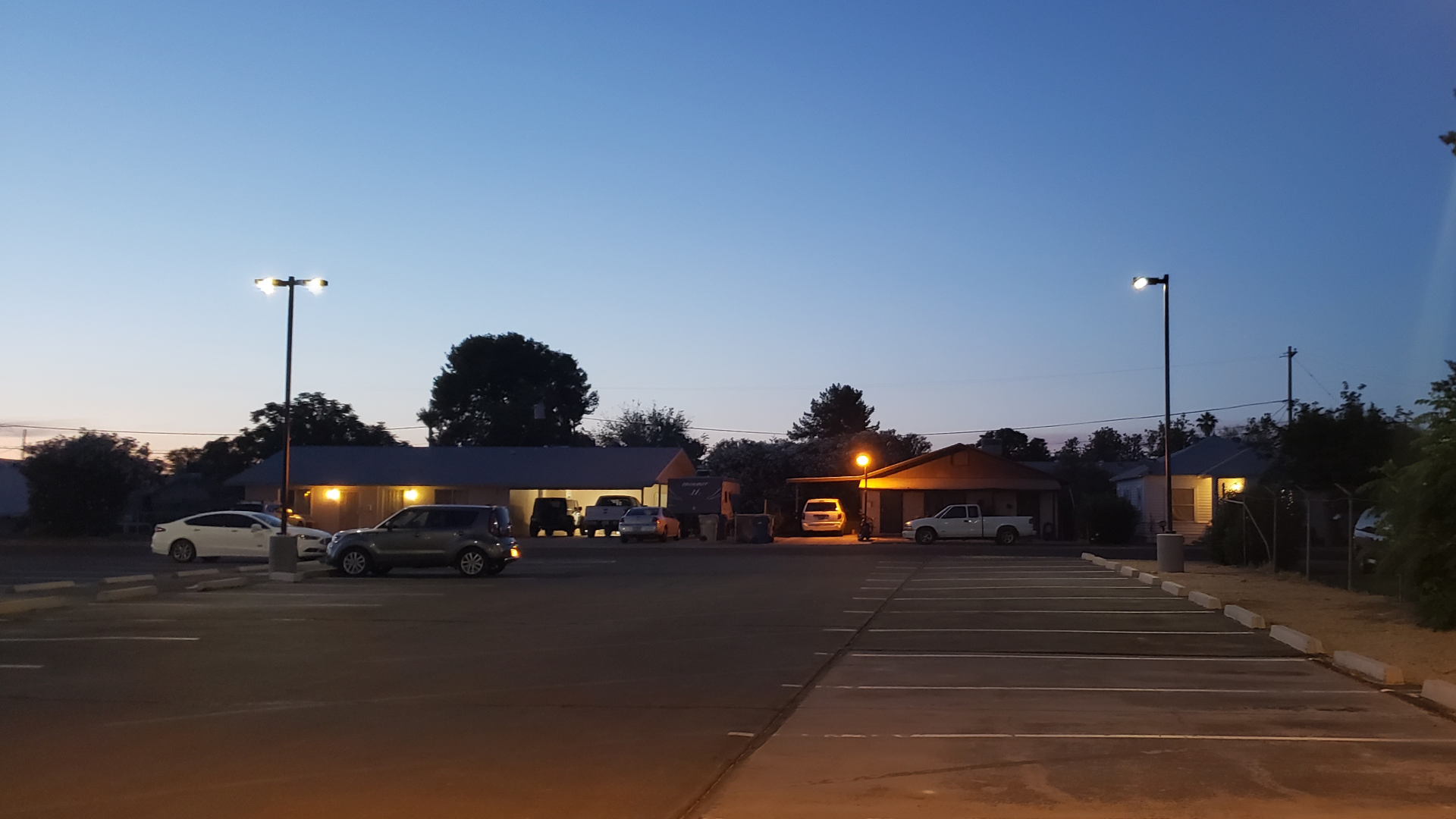
Solar Parking Lot Lighting: No Trenching, No Wiring, Installed in Under 30 Minutes
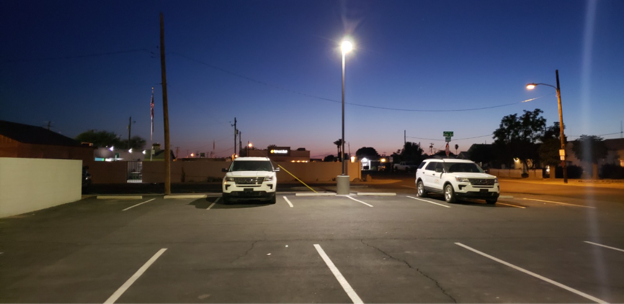
Key Takeaways
Parking lots need reliable lighting. The expensive part usually isn't the fixture, it's the trenching, wiring and electrical work needed to power it. FLT solar lighting removes that cost.
- FLT solar fixtures generate and store their own power within each fixture, so there's no trenching, conduit or grid connection.
- With no electricity, or utility coordination needed, installs move faster and are less likely to hold up the rest of the project.
- Solar fixtures have no buried copper so there's nothing on site for thieves to strip.
- Retrofits on already paved lots are straightforward, since there's no trenching through the existing surface.
Property owners and public works teams should price FLT solar lighting against wired from the start of a project, with lifecycle cost savings in mind.
Every parking lot lighting project comes down to one question early on: how hard is it to get power to the poles? When conduit isn't in place, solar lighting usually winds on cost and schedule. When it is, the comparison comes down to long-term factors like energy bills, copper theft and uptime during outages, which are worth weighing before defaulting to wired.
Why Trenching Is the Real Cost Driver in Solar Lighting for Parking Lots
On a wired parking lot lighting job, most of the budget goes into getting power to the poles. That means trenching, conduit and copper wire for every pole, with costs that scale as the lot grows. Every wired light also has to connect to an electrical panel. If the existing panel is full, the project needs a panel upgrade or a new utility service connection, which adds permits and more scheduling. On lots that are already paved or landscaped, the trenching itself can close off parts of the property for days or weeks while tenants, customers or residents work around it.
FLT's solar fixtures like the SCL2 high-efficacy commercial luminaire, one of the company's most widely installed, avoid that work entirely. Each pole goes into a standard footing, the fixture is mounted, and it's ready to operate the same day. With no trenching, conduit or wiring, the labor comes down to the footing, the pole and the fixture. The install schedule isn't tied to an electrician's availability or a utility service connection, and a newly paved lot doesn't have to be cut open for wiring.
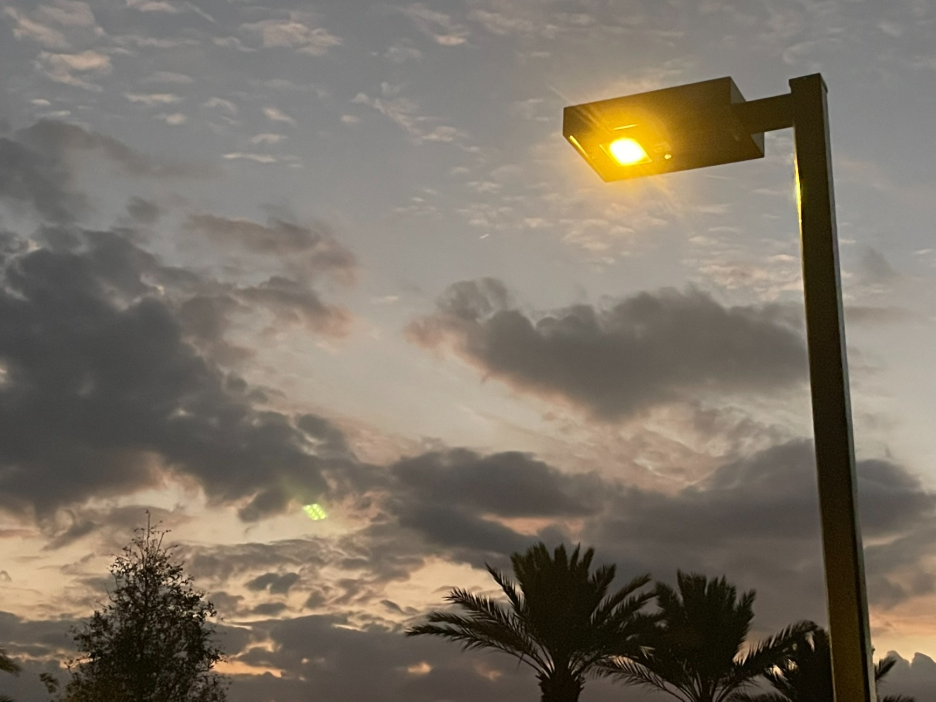
How Fast Is a Solar Parking Lot Light Install, Really?
A single FLT solar fixture installs in under 30 minutes with one person and no electrician. For a full lot retrofit, that means the schedule is driven by how many poles need to be mounted, not by how many linear feet of trench need to be dug and inspected. Developers working against a hard move-in date, and municipalities trying to avoid a multi-week street closure, both feel that difference directly. FLT's Director of Innovation, Brock Johnston, walks through a quick SCL2 install:
Copper Theft Turns Wired Lots Into a Recurring Cost
Copper wire theft is an active, worsening problem for the infrastructure that shares a corridor with parking lot lighting circuits. A December 2025 CNN investigation into Los Angeles found that theft and vandalism-related outages on public infrastructure rose roughly tenfold between 2017 and 2022, with copper theft as a primary driver, leaving cities to absorb both the repair cost and the outages while crews replace the wire.
Parking lots are a common target. Thieves can pull copper from pole bases and pull boxes without much risk of being seen, and every fixture on that circuit stays off until an electrician replaces the wire. FLT's solar fixtures don't have copper wire running between poles, so there's no wire to steal. Each fixture also runs independently, so if one goes down, the rest of the lot stays lit.
Parking Lot Crime Prevention Depends on Reliable Lighting
Good lighting in a parking lot helps drivers see, and it also helps deter crime. The National Insurance Crime Bureau's own public guidance tells drivers to park in well-lit areas. For a property owner, that means lighting the lot well enough that drivers want to park there.
Lighting also matters for people on foot. The Governors Highway Safety Association's most recent analysis of pedestrian fatalities found that more than three-quarters of pedestrian deaths happen after dark. Parking lots put pedestrians and moving vehicles in the same space, often at night, which makes consistent lighting a practical safety measure.
FLT solar fixtures aren't affected when a wired circuit fails, whether from copper theft or a repair backlog. Many FLT fixtures also offer motion sensing, so lights can run lower when the lot is empty and brighten when someone arrives.

What to Look for in Solar Lighting for Parking Lots
Not every solar fixture on the market is built for the output and duty cycle a parking lot demands. A few things worth checking before committing to a vendor:
- Battery chemistry and cycle life. A parking lot fixture runs all night, every night, so the battery needs to hold up through years of daily charging and use. Check the battery chemistry and rated cycle life on the spec sheet. FLT uses its FLT All-Weather™ LiFePO4 Battery, built for reliable performance in extreme temperatures.
- Charging efficiency. An MPPT charger optimizes power generation and performs better than standard PWM controllers in cold weather, partial shade and low winter light. The FLT ChargeLogic™ MPPT works with our battery and controller to provide a highly efficient, optimized solar light.
- Output and pole spacing. Lumen output determines how many poles a given lot will require. Higher-output fixtures can mean fewer poles and fewer footings.
- Autonomy and adaptive controls. A solar fixture has to carry a site through several overcast days in a row without going dark, which depends on how carefully it manages stored energy. Each FLT order ships with a lighting profile, set by duration or by clock time, that plans how output changes through the night to fit the location and how the lot is used. The profile can be adjusted after installation if needs change. The FLT Adaptive Intelligence™ Lighting Controller handles what a schedule can't predict, managing how much energy is delivered each night so the lights stay on through low-sun stretches. Most FLT fixtures use astronomical timing, so every light on the lot switches on together. Unlike many solar lighting products, which run on a fixed schedule regardless of battery level, FLT fixtures adjust output in real time to keep the lights on.
- Durability and cold-weather performance. Lots that see snow, road salt or extreme heat need fixtures built for it. FLT fixtures are built from durable cast aluminum with stainless steel fasteners and architectural-grade powder coat rated to AAMA 2603 or 2604 specifications, and will stay lit in temperatures ranging from -20°C to 60°C.
Solar Lighting for Municipal and Commercial Parking Lots
Public works departments and commercial property managers usually weigh this decision differently, but solar often comes out ahead for both.
For a municipal lot, the drivers are usually budget and funding requirements. Trenching a public lot means traffic control, permitting, and a construction timeline that competes with other capital projects for scheduling and staff. FLT's 100% North American manufacturing also matters to public buyers. FLT is Buy American compliant.
For a commercial property, the priority is usually keeping the business running. A retail center, office park or apartment community can't easily close off an active lot for trenching. FLT fixtures install quickly with no trenching or electrician, so work can be done in sections while the rest of the lot stays open.
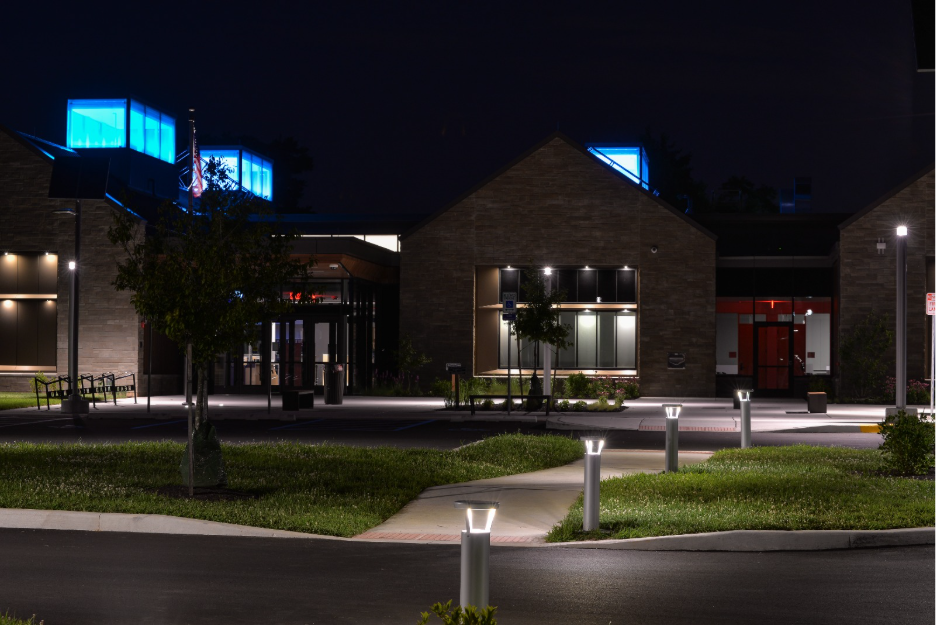
Talk to FLT About Your Parking Lot
If a parking lot lighting project is on the table, whether it is a new-build lot with no infrastructure yet, or a retrofit where trenching simply is not practical, FLT's engineering team can build a complimentary lighting layout with the right fixture for the lot's dimensions and traffic pattern. FLT designs its fixtures around what customers report from real-world installations.
Frequently Asked Questions
A few questions come up consistently from public works staff and property managers evaluating solar for the first time.
How Does Solar Lighting Work in a Parking Lot?
Most FLT fixtures combine FLT Active Cell™ solar panels, a FLT All-Weather™ LiFePO4 Battery, and LED light head and FLT Adaptive Intelligence™ Lighting Controller into one unit mounted on a pole or bollard. The panel charges the battery during daylight hours. On supported fixtures, the controller uses the fixture's GPS location to calculate sunset and sunrise, switching the light on at dusk and adjusting automatically as day length changes through the year. No trenching, wiring or grid connection is required.
Is Solar Parking Lot Lighting Bright Enough for a Busy Commercial Lot?
Yes, when the fixture and pole spacing are matched to the site. High-efficacy area lights like the SCL2 are designed for exactly this use, and FLT's engineering team lays out pole placement and fixture selection based on the lot's dimensions, traffic pattern and any local lighting ordinance requirements before installation begins.
Does Solar Parking Lot Lighting Work in Winter or Cloudy Climates?
Yes. when the fixture and lighting profile are matched to the site's climate. FLT fixtures pair the FLT All-Weather™ LiFePO4 Battery with the FLT ChargeLogic™ MPPT charger, which gets more energy out of the panel in cold weather and low winter light. The battery stores enough to charge to carry the lights through several overcast days in a row. Through long stretches of poor weather, the FLT Adaptive Intelligence™ Lighting Controller adjusts output nightly to preserve charge so the lot stays lit. FLT fixtures have more than a decade of real-world deployment, including installations in Colorado mountain town.
How Much Does Solar Parking Lot Lighting Cost Compared to Wired?
Total installed cost depends on the site, but the comparison consistently favors solar once trenching, conduit, permitting and utility connection fees are included in the wired estimate. Solar lighting's ongoing costs are also lower, since there is no electricity bill and no copper wiring to replace after a theft incident. A detailed quote requires a site-specific layout from FLT's engineering team.