

Solar Lighting for Pathways
Key Takeaways
A pathway that goes dark at sunset puts pedestrians and cyclists at a disadvantage every night.
- Trenching through parkland, greenbelts or rocky trail terrain is often the single biggest obstacle to lighting a path at all.
- Self-contained solar fixtures need no electrical permitting on remote trail segments far from any utility connection.
- Even, glare-free coverage from bollard-height fixtures suits pedestrian and cyclist sightlines better than tall pole lighting.
- Solar lighting for pathways extends the hours a trail, greenway or campus walkway is actually safe to use.
Underlit trails don't get used after dark, and lighting that's an afterthought usually stays that way through phase two, phase three and the ribbon-cutting. The fix is treating lighting reach as part of the plan from day one, not something to revisit once budget allows.
The difficulty with wired lighting is that trails often run through terrain that makes trenching impractical, expensive, or against the rules. Rocky grades, protected root zones, wetland buffers, and easements all complicate running conduit alongside a footpath. Even where trenching is technically possible, digging up a finished trail to bury wire undercuts the purpose of building a low-impact path in the first place.
FLT's solar lighting for pathways solves this by removing the wire entirely. Each fixture generates, stores and uses its own power on site, with FLT's Adaptive Intelligence™ Lighting Controller tuning output to the season and site, so a trail segment half a mile from the nearest electrical service performs exactly like one next to a parking lot.
Solar Lighting for Trails: Why Trenching Isn't the Answer
Parks and trail projects don't control the land the way a commercial developer controls a lot. Trails cross conservation easements, cemetery grounds, floodplain buffers and terrain left deliberately undisturbed. Trenching can trigger a separate environmental review or simply isn't permitted, regardless of budget.
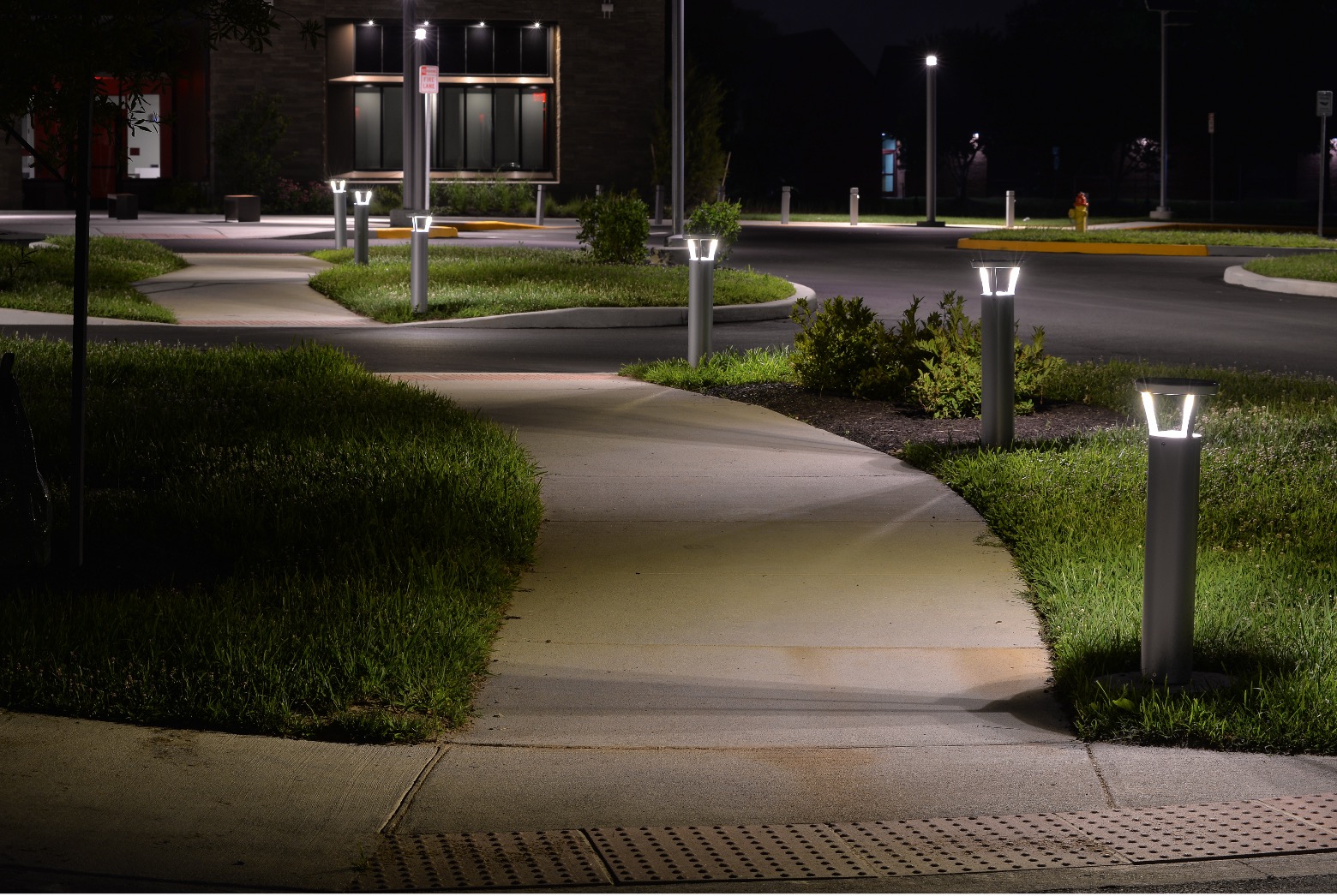
FLT's self-contained solar bollards avoid this problem structurally. Our PLB bollard is the most widely specified fixture for pathways and parks. It installs into a small footing with no trench and no conduit connecting it to anything else. A crew can light a mile of trail in sections, on whatever schedule the budget allows, without a single linear foot of wire in the ground.
How Does FLT Solar Lighting Work on a Remote Trail Segment?
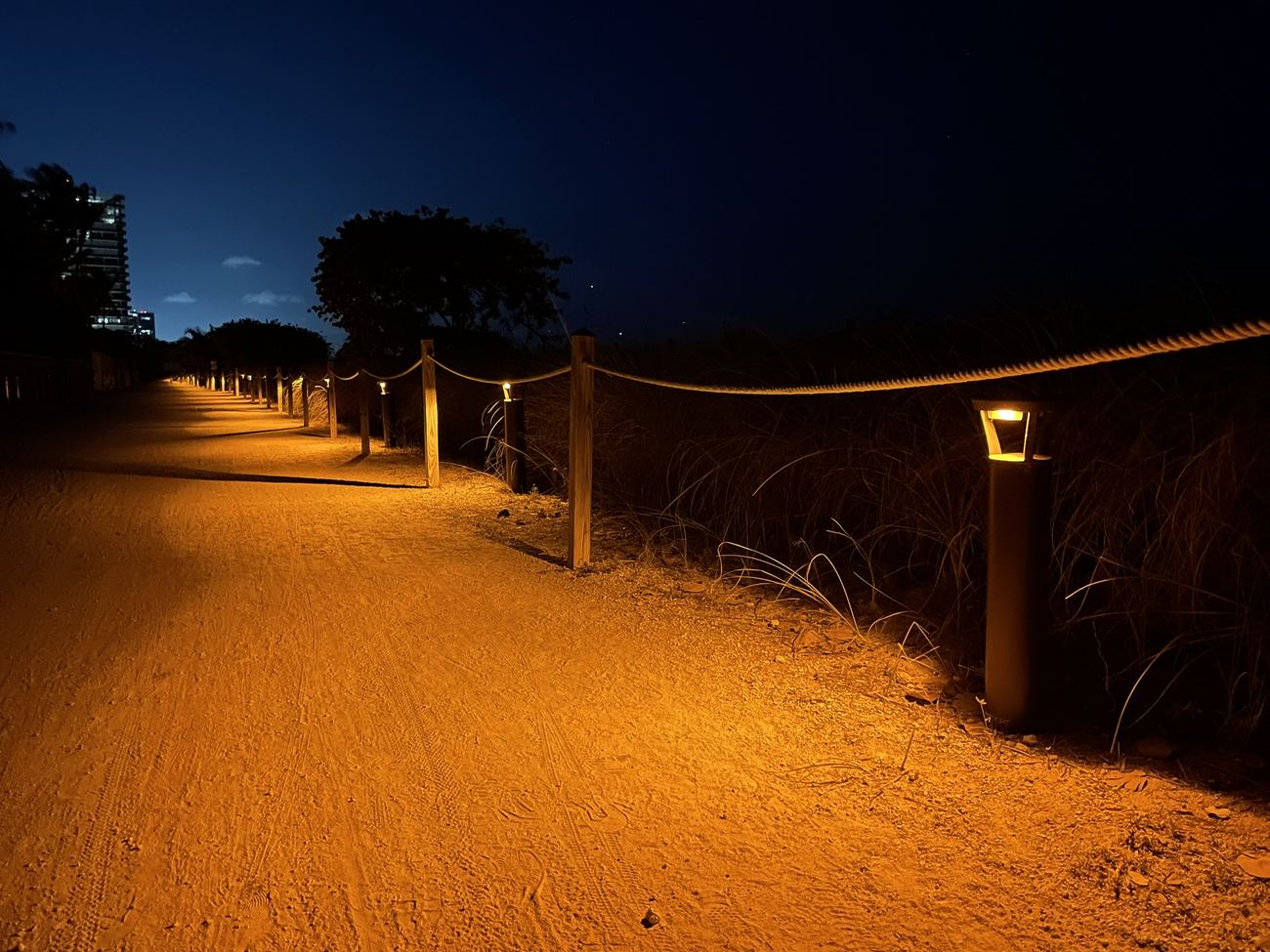
Our bollards or pole-mounted fixtures pair a solar panel with FLT's All-Weather™ LiFePO4 battery and a LED head in one unit. During the day, the panel charges the battery and FLT's Adaptive Intelligence™ Lighting Controller then uses GPS and astronomical timing to switch the light on at dusk and off at dawn, adjusting automatically through the year without a technician resetting anything. Because the fixture needs no grid connection, distance from a utility line simply doesn't factor into where a trail segment can be lit.
Safety After Dark Is Not a Small Concern
The case for lighting a pathway isn't cosmetic. Governors Highway Safety Association data shows that more than three-quarters of pedestrian fatalities occur after dark, and that the share of nighttime deaths has grown sharply over the past decade. Shared-use paths, greenways, and campus walkways put pedestrians and cyclists in exactly the low-visibility conditions that data describes, often without the sidewalk separation that exists on a typical street.
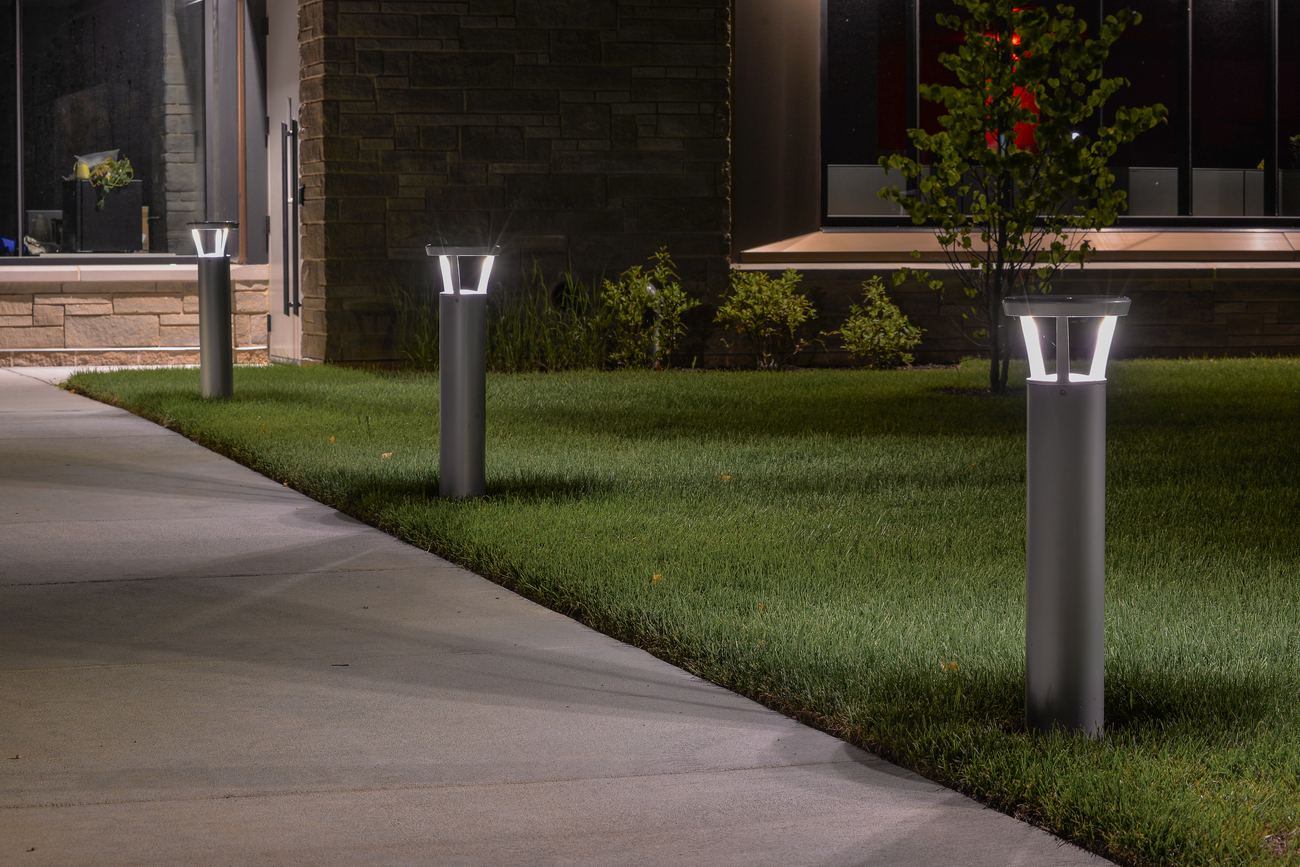
Even, consistent light matters as much as raw output here. Bollard-height fixtures like FLT's PLB light the walking surface directly in front of a person's feet without throwing glare into their eyes or into nearby homes and habitats, which is a meaningfully different design goal than a tall pole solar street light. For higher-traffic connector paths and trailheads, FLT's IPL fixture steps up output while keeping the same low, path-scaled profile.
Skipping the Trench Saves the Budget
Parks and recreation agencies operate on a funding path that looks nothing like a general municipal capital budget: trail grants, parks bonds, conservation easement stipulations and volunteer-driven capital campaigns. A 2025 ASCE infrastructure report on the nation's public parks found that deferred maintenance backlogs have climbed steadily in recent years, a sign that discretionary capital for new amenities like trail lighting is already competing hard against basic upkeep.
Solar lighting changes that competition. Because there's no trenching, no conduit and no ongoing electricity bill, a trail lighting project can often be phased in segments as grant dollars come in, rather than requiring the full electrical infrastructure budget up front. That flexibility matters more for a parks department working grant cycle to grant cycle than it does for almost any other buyer FLT serves.
Dimming and Amber Options for Wildlife-Sensitive Corridors
Pathways frequently run through habitat that's sensitive to light pollution: wetland edges, dark sky communities, and wildlife corridors near dusk-active species. FLT fixtures support amber CCT options: full-cutoff, with effectively zero blue light, suited to sea turtle and migratory wildlife habitat. For settings that need a brighter option without the light-pollution impact, FLT also offers Lumileds NightScape™ technology, which reduces blue light to under 2%. This is a meaningfully different requirement than a parking lot or street light, where maximum brightness is the goal.
Most of FLT's product line is DarkSky Approved, certified by DarkSky International based on manufacturer testing against strict limits for uplight, color temperature and blue light. Fixtures not yet carrying that certification are generally DarkSky Compliant, designed to the same dark-sky principles without formal certification. The exception is our WLB, where certification isn't a requirement for its wayfinding application. Because certification is granted per product and configuration, the FLT team can help recommend the right fixture and configuration for your specific DarkSky requirements.
What a Pathway Lighting Layout Actually Needs
A few things worth locking down before specifying a trail lighting plan:
- Trail width and expected traffic mix. A narrow footpath and a shared-use bike and pedestrian corridor call for different spacing and output.
- Ambient light sensitivity. Note any dark sky ordinances, adjacent residential property, or wildlife habitat that should shape CCT and dimming choices.
- Segment phasing. Because there's no trench to coordinate, lighting can roll out trailhead-first and extend as budget allows, rather than requiring the whole corridor at once.
- Terrain and mounting. Rocky or root-heavy ground may call for a different footing approach than open turf; FLT's engineering team accounts for this during layout.
Ready to Light a Trail Section
Parks departments, HOAs managing shared trail systems, and developers building pathway connections between phases can all use the same no-trench approach. FLT's engineering team will lay out fixture spacing and CCT selection based on the specific trail's traffic, terrain and any lighting ordinance in play.
Frequently Asked Questions
A few questions come up often from parks staff and HOA boards planning a pathway lighting project.
Can FLT Solar Pathway Lights Be Installed Without Digging Up the Trail?
Yes. Each fixture sits on its own footing and needs no trench or conduit connecting it to another pole or a power source, so installation disturbs only the small footprint where the fixture itself is mounted.
Are FLT Solar Bollards Bright Enough for a Shared-Use Bike and Pedestrian Path?
Yes, when spacing and fixture selection match the path's traffic. Higher-traffic connector paths often use a step up in output from a standard bollard, such as FLT's IPL fixture, while narrower footpaths are well served by the standard PLB bollard spacing that FLT's team calculates per project.
Do FLT Solar Pathway Lights Disturb Wildlife or Violate Dark Sky Ordinances?
Amber CCT options and controlled dimming are available for wildlife-sensitive corridors, and most of FLT's product line carries DarkSky Approved certification. Because certification is granted per product and configuration, the FLT team can help identify the right fixture and configuration for your specific DarkSky requirements.
How Long Do FLT Solar Pathway Lights Last Between Maintenance Visits?
FLT's flagship bollard platform has more than 14 years of field history, and our FLT All-Weather™ LiFePO4 Battery and FLT ChargeLogic™ MPPT design is built for long service life with minimal upkeep.